

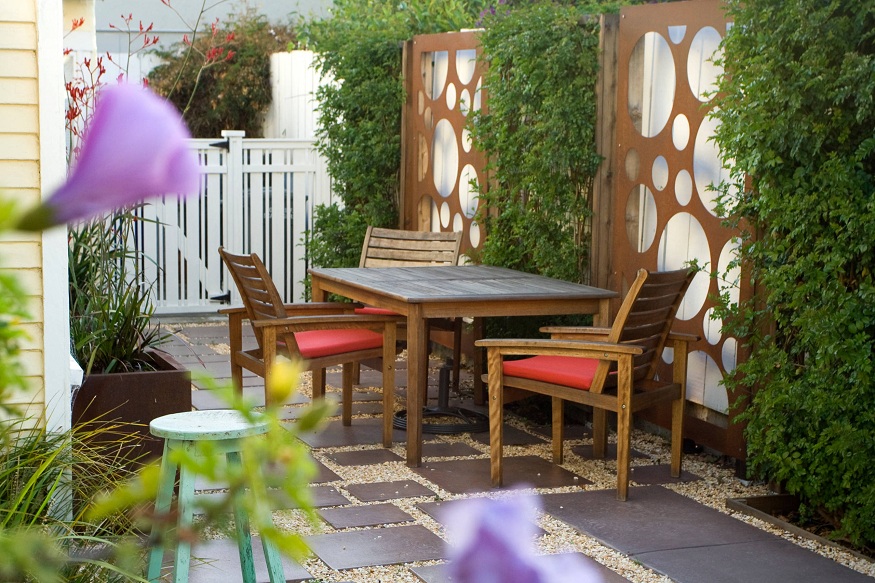
Blank walls in your garden are often just accepted as part of the landscape. They serve a purpose, of course. They divide, contain and support. But visually, they are often a missed opportunity.
With a little imagination, these blank surfaces can become something much more. They can frame your plants, shape your outdoor experience and even become features in their own right. A wall should not be an afterthought. It can be the backbone of your garden design.
Take a second look
Step into your garden and really see the walls around you. What role are they playing? Are they defining a space? Blocking a view? Fading into the background?
Many of us treat these surfaces as passive. They are just there. But a well-treated wall can set the mood. It can be a backdrop for a dining area or a quiet reading corner. It can support a vertical garden or display sculptural features.
Before you start planting or rearranging furniture, consider how your walls can help shape the space.
Use colour to shift the mood
Painting a wall is one of the easiest and most affordable ways to make an impact. A light, soft shade can open up a small garden and reflect sunlight. A dark, rich tone can ground the space and make greenery pop.
If you are after a bold effect, try terracotta, sage green or deep navy. These work especially well in gardens with natural timber, stone or metal finishes. The goal is not to make the wall the star, but to use it as a canvas that enhances everything around it.
Add structure and pattern
If your garden feels a little flat, your walls can help add depth and rhythm. Horizontal panelling, tilework or textured materials break up large, featureless surfaces and draw the eye.
You do not have to apply new materials across the entire wall. Often, cladding just one portion -perhaps the top third or around a garden nook – adds enough contrast to refresh the space.
For a modern update with low maintenance, you could consider a single section of composite cladding. It blends well with most garden palettes and requires very little upkeep over time.
Read More: How to Choose the Right Quartz Countertop Supplier in Virginia
Support your planting
Walls are a natural support system for climbing plants. Whether you go for a formal espaliered fruit tree or a cascade of jasmine, adding height through planting brings a lush, layered feel.
Use wires, wooden trellises or metal frames to guide growth. If your wall is shady, go for ivy, ferns or climbing hydrangeas. In sunnier spots, clematis, honeysuckle and roses thrive.
These vertical additions soften hard edges and bring life to otherwise cold or sterile surfaces.
Hang something unexpected
Think beyond paint and plants. Walls are also display space. Mirrors, salvaged windows, ceramic tiles or even framed artwork designed for outdoor use can give your garden personality.
Try grouping three or five items rather than scattering them. This creates intentionality and makes the area feel styled. Just make sure everything is weatherproof and securely attached.
This approach works well on small terraces or patios where you do not have much ground space for styling.
Create a feature zone
If you have a seating area, a cooking space or a hot tub corner, define it with the wall behind it.
A textured backdrop helps separate that area from the rest of the garden and adds intimacy. You can do this by cladding just that section, mounting lighting or adding outdoor shelves for candles and plants.
The wall becomes a frame. It holds the mood of the space and gives it purpose.
Make lighting part of the story
Garden lighting is not just for safety. It is one of the easiest ways to add atmosphere after dark.
Uplighting from the base of a wall gives drama. Wall-mounted lights provide symmetry and focus. Even fairy lights strung across the top edge can add a gentle, ambient glow.
Think about how you use your garden in the evening. Lighting your wall turns it from a blank void into part of the experience.
Mix materials
A solid wall does not have to stay solid. Combine different finishes to create variation.
Try using reclaimed wood for part of the surface, metal trellises for texture, or a living wall panel in a key spot. These shifts in material keep things visually interesting and make even a small garden feel dynamic.
The trick is to use just two or three materials max and repeat them elsewhere in the garden to keep it cohesive.
Read More: Why Interior Design Makes a Huge Difference in Home Value
Borrow ideas from indoors
The best outdoor spaces feel like extensions of your home. If you love gallery walls, consider one for your fence. If you prefer a minimalist look inside, carry that clean feel out with a painted brick wall and simple foliage.
Shelves, wall hooks and even outdoor mirrors can all work brilliantly. Just treat them as you would inside, with attention to arrangement, colour and proportion.
For wider commercial, hospitality, or public-facing projects, small supporting details can make the finished space feel more complete. Composite decking can provide a durable, low-maintenance surface for terraces, entrances, outdoor seating areas, and customer-facing spaces; while hand dryers can support cleaner, more efficient washroom facilities; while traditional signage can add character, direction, and brand presence; while digital signage can share changing information, promotions, menus, or wayfinding updates clearly.
Final thoughts
A wall in your garden should never be just a wall. With a little attention, it becomes a tool. A backdrop. A canvas. A support system. Even a feature.
Whether you paint, plant, hang or clad, that once-ignored surface can suddenly become the most powerful part of your garden design. It pulls the whole space together and gives everything else a chance to shine.
Next time you step outside, don’t look past the walls. Look at them. Then imagine what they could be.