

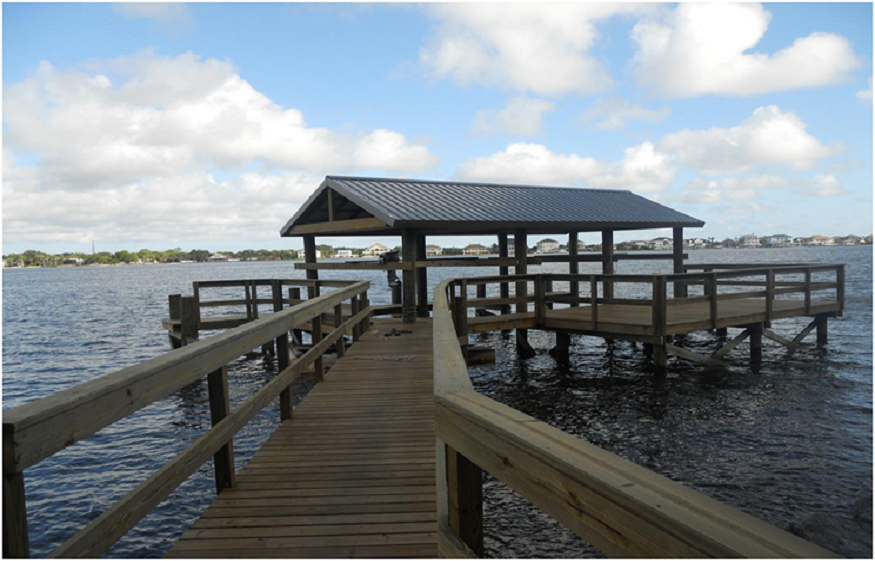
Waterfront property in Florida has a way of selling itself, until it doesn’t. The view gets people in the door. What keeps them there and spending is how the space actually works once they arrive. We’ve seen it play out more times than we can count: two properties with nearly identical locations, but one quietly outperforms the other. The difference usually sits right at the waterline. A dock that’s easy to navigate. A deck that feels intentional, not squeezed in as an afterthought. Done right, these structures don’t just support the business; they shape it. That’s the real leverage behind commercial docks and decks construction in FL.
It Starts With How the Space Gets Used
Designing for waterfront commercial use isn’t about chasing a look. It’s about reading how people move, where they pause, and where things bottleneck.
A marina owner once told us his biggest problem wasn’t capacity, it was flow. Boats could dock, sure, but foot traffic jammed up near access points. We widened sections of the dock, adjusted entry angles, and added a bit of breathing room. Nothing flashy. But the difference showed up almost immediately in how smoothly things ran.
That’s the kind of detail that defines commercial docks and decks construction in FL when it’s done properly. You’re not guessing. You’re solving for real behavior.
Layout Has a Direct Line to Revenue
People don’t think about layout as a revenue tool, but it is. Subtly, constantly.
Give a waterfront restaurant a cramped deck, and guests turn over faster than you’d like. Open it up, add comfortable spacing, maybe a shaded edge where people linger, and suddenly tables stay full longer, checks go up, and evenings stretch.
We’ve reworked decks where the only change was layout. Same square footage. Different results.
At Docks, Decks and More, that’s often where we start. Before materials, before finish, just understanding how the space earns its keep. Because in commercial docks and decks construction in FL, design decisions don’t stay on paper. They show up in the numbers.
Materials: Where Shortcuts Come Back to Bite
Florida water doesn’t ease you in. Salt, heat, humidity, it all gets to work immediately.
We’ve replaced plenty of docks that looked fine at first glance but were already failing underneath. Wrong fasteners. Untreated connections. Wood that wasn’t meant for this environment. It adds up.
So we’re deliberate here. Marine-grade lumber where it makes sense. Composite, which reduces maintenance without compromising strength. Stainless where corrosion would otherwise win.
Nothing exotic. Just materials that hold up in real conditions. That’s a big part of how we approach commercial docks and decks construction in FL: build it once, build it right, and don’t leave future problems buried in the frame.
Permits, Regulations, and the Stuff That Slows Projects Down
This is the part most people underestimate. Not the building, the process around it.
Florida doesn’t treat waterfront construction casually. There are environmental considerations, shoreline protections, and local requirements that vary more than you’d expect. Miss a step, and suddenly you’re not building, you’re waiting. Or worse, reworking.
We handle that side of things as part of the job. Not because it’s exciting, but because it matters. A clean, approved project moves forward. A messy one drags.
Every commercial docks and decks construction FL project we take on is built with that in mind from day one.
Durability Isn’t About Overbuilding. It’s About Building Smart.
There’s a difference.
You don’t need to over-engineer everything. But you do need to understand what the structure will face over time. Load, weather, and use patterns, they all factor in.
We’ve worked on docks that see constant commercial traffic, equipment rolling across daily, boats coming and going without pause. Those builds need to hold up without constant attention. Not because maintenance is avoidable, but because downtime costs money.
At Docks, Decks and More, we lean into that reality. Strong pilings where they matter. Framing that doesn’t flex under pressure. Finishes that don’t give up after a season.
That’s the quiet side of commercial docks and decks construction, FL, the part you don’t notice when it’s done right.
Experience Shows Up in the Details
Waterfront work has its own rhythm. You don’t really learn it from drawings.
You learn it from watching how tides shift, how soil behaves, how materials age out here. From seeing what holds up after five years, a nd what doesn’t.
We’ve been doing this long enough to recognize those patterns. It shapes how we build, and just as importantly, what we avoid.
Build It Like It Matters, Because It Does
If you’re running a commercial waterfront property, your dock or decision’s background. It’s part of the business. It influences how people move, how long they stay, and how often they come back.
At Docks, Decks and More, we build with that in mind. Not just to complete a project, but to support how your property actually operates day to day.
If you’re planning a new build or rethinking an existing one, let’s talk it through. We’ll walk the site, look at how it’s being used, and give you a straight answer on what makes sense.
And if your focus is deck construction in Jacksonville FL, we’re already working in that environment every day.
FAQs
1. How do docks and decks increase ROI for commercial properties?
They improve usability, attract more visitors, extend operating hours, and reduce maintenance costs when built correctly.
2. What materials are best for commercial docks in Florida?
Marine-grade wood, composite decking, and corrosion-resistant hardware perform best in saltwater and high-humidity conditions.
3. How long does commercial dock construction typically take?
Timelines vary based on project size and permitting, but most projects take several weeks to a few months from start to finish.
4. Are permits required for commercial waterfront construction in Florida?
Yes. Most projects require permits and must comply with environmental and structural regulations.
5. Can existing docks or decks be upgraded instead of replaced?
In some cases, yes. A structural assessment will determine whether repairs or a full rebuild is the better investment.